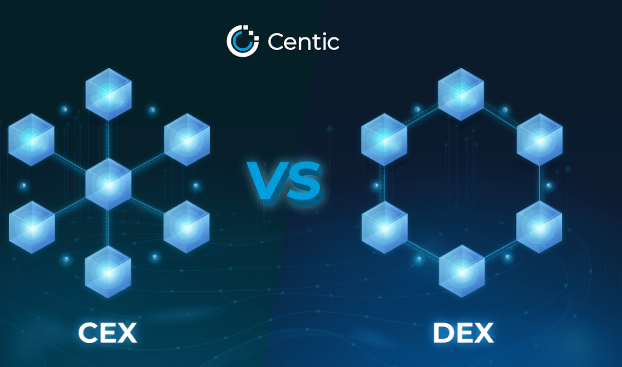
Centralized vs Decentralized Exchanges

Centralized and decentralized exchanges offer distinct models for executing trades and managing custody. CEXs provide speed, liquidity, and familiar interfaces but require trust in a third party. DEXs enable on-chain custody and transparent governance, at the cost of potentially higher complexity and variable liquidity. The choice hinges on custody preferences, risk tolerance, and desired governance. As markets evolve, understanding these trade-offs remains essential for participants navigating liquidity, compliance, and control.
Centralized vs Decentralized Exchanges: How They Work
Centralized exchanges (CEXs) and decentralized exchanges (DEXs) operate on fundamentally different architectures, guiding how users trade assets and how custody, settlement, and governance are handled. CEXs centralize order matching and custody, while DEXs automate via smart contracts. Security models differ, and governance structures shape upgrades and rules, reflecting market dynamics and desired freedom within institutional frameworks and code.
Key Trade-Offs: Custody, Security, and Regulation
The shift from centralized to decentralized architectures naturally foregrounds three core trade-offs: custody, security, and regulation.
In practice, custody implications shape user control and liability, while security models influence attack surface and resilience.
Regulatory risk remains a moving target for operators and users alike, prompting ongoing assessment of compliance, transparency, and accountability within evolving market structures.
Comparing Liquidity, Fees, and User Experience
Liquidity, fees, and user experience diverge meaningfully between centralized and decentralized exchanges, shaping participant incentives and market depth.
The analysis notes that order flow and liquidity provision mechanisms drive visible price discovery disparities, while fee structures affect cost of capital and trading frequency.
Market depth varies with liquidity pools and order books, influencing slippage, execution speed, and strategic freedom for participants.
Choosing the Right Exchange for Your Goals
Choosing the right exchange depends on objective-driven tradeoffs between control, security, and cost. The analysis compares custody models, balancing on-chain self-custody versus hosted storage, and considers regulatory compliance. Users should map goals to risk tolerance, liquidity needs, and tooling access, evaluating interoperability, uptime, and insurance coverage. In freedom-minded markets, transparent governance and verifiable security practices guide decisive selection.
See also: 5G Technology: Unlocking Ultra-Fast Connectivity
Frequently Asked Questions
How Do Withdrawal Times Vary Between CEXS and DEXS?
Withdrawal times vary: CEXs typically offer faster, standardized processes with higher liquidity depth but subject to KYC/limits; DEXs may be slower during congestion yet leverage on-chain liquidity depth and gas dynamics, affecting withdrawal speeds differently.
Which Exchange Type Best Protects User Privacy?
“Privacy is paramount.” An analytical observer notes that neither exchange type inherently guarantees it; however, dexes emphasize privacy controls and data minimization more effectively, while CEXs often require broader identity verification and auditing. Market-aware, tech-focused evaluation.
What Are the Tax Implications of Trading on Each Type?
Tax treatment and capital gains differ: centralized venues trigger formal reporting obligations and KYC requirements, while decentralized platforms may offer looser compliance paths; traders should expect broader regulatory scrutiny, potential withholding, and evolving tax treatment amid market volatility and innovation.
How Do Halts and Outages Differ Across Exchanges?
How do halt outages differ, and what do liquidity halts signal about resilience? They vary in trigger mechanics, duration, and cross‑exchange coordination; halt outages reflect system pauses, while liquidity halts focus on trading imbalance, liquidity softness, and risk controls.
Can You Still Access Staking and Yield in CEXS Vs DEXS?
Staking accessibility persists on many CEXs, though openness varies; DEXs often emphasize on-chain control. Yield availability is generally broader on CEXs via custodial programs, while DEXs attract diversification and liquidity incentives, aligning with a freedom-loving, market-aware tech stance.
Conclusion
Both centralized and decentralized exchanges reflect complementary paths in a market built on trust and code. The coincidence is striking: individuals seeking speed and liquidity often collide with those valuing custody and verifiability, guiding the same trader toward hybrid models or temporary custody solutions. As regulators tighten, on-chain transparency and off-chain compliance converge. The most resilient trader embraces flexibility—leveraging CEXs for liquidity and DEXs for control—always aligning tools with evolving risk, governance, and governance-ready infrastructure.