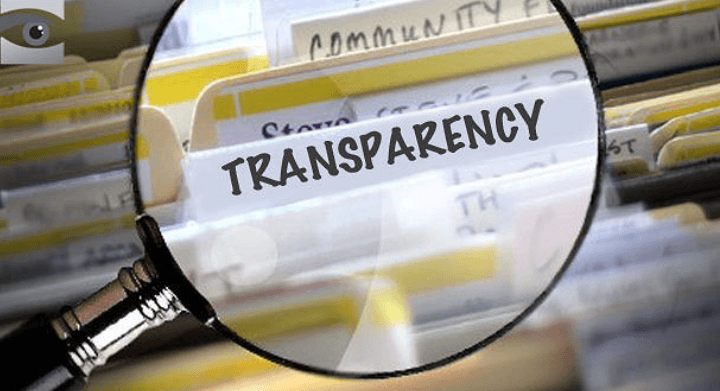
We Need Transparency in All Aspects of Life More Than Ever

Trust is built on visibility. When people cannot see what is happening behind the curtain (whether in a business, a government, or a personal relationship), they fill that gap with suspicion. And usually, they are right to do so. The world has moved fast over the past two decades, and with that speed has come enormous complexity, often used to obscure rather than explain.
Transparency in Business as a Crucial Aspect
Business today, especially online, has developed a troubling habit of hiding behind complexity. Terms and conditions run to dozens of pages. Pricing structures are layered with fees that only appear at checkout. Data usage policies are written in language that requires a legal degree to decode. This is not accidental. Many businesses design their communication to inform as little as possible while technically disclosing everything the law requires.
This matters because trust, once damaged, rarely recovers. A customer who feels tricked doesn’t complain; they simply leave and tell others. Businesses that understand this invest in clarity: plain language, honest pricing, straightforward refund policies, and genuine accountability when things go wrong.
Patagonia is a strong example of a brand that has built loyalty directly through transparency. The outdoor clothing company has been open about its supply chain, its environmental impact, and even the limitations of its sustainability efforts. Rather than projecting a polished image, Patagonia has consistently shown its work. Patagonia’s transparency became its identity, and that identity became its strongest competitive advantage.
This also shows up in newer industries, such as the casino industry. Those casino players who want to play games such as Book of Dead, The Dog House, or table games will always do so on licensed sites. A license is not just a legal formality; it represents a commitment to operating under rules that protect the player. Licensed casinos must clearly display their terms, process withdrawals within defined timeframes, and submit to independent audits.
That structure is transparency in practice, and players have learned to recognize it as the difference between a trustworthy platform and one that will find reasons not to pay out.
What Transparency Means in Politics and Public Institutions
Governments operate on public money and public trust. When either is mismanaged without explanation, the damage extends far beyond a single policy failure. Citizens who cannot access clear information about how decisions are made, how budgets are spent, or why laws are passed begin to disengage entirely. That disengagement creates a vacuum that bad actors fill easily.
Countries that have invested in open government initiatives (publishing budget data, making legislative records accessible, creating independent oversight bodies) consistently score higher on public trust indexes. This is not a coincidence. When people can see the process, they can evaluate it, criticize it, and improve it. Opacity breeds cynicism; visibility invites participation. A government willing to be examined implicitly signals confidence in its own decisions.
Honesty in Personal Relationships
The most immediate place where transparency plays out is between people. Friendships, romantic partnerships, and family relationships all depend on a willingness to be honest, not just about facts, but about feelings, expectations, and limits.
Most relationship breakdowns do not happen because of a single dramatic event. They happen because small truths were withheld over long periods of time until the gap between what was said and what was felt became too wide to cross.
Transparency in relationships does not mean saying everything all the time without a filter. It means not performing a version of yourself you can’t sustain. People often present idealized versions of themselves early in a relationship (professionally, romantically, socially) and then find that maintaining that performance is exhausting and isolating. The relationships that last are the ones where both people feel safe enough to be accurate rather than impressive.
This is harder than it sounds because vulnerability carries real risk. Being honest about uncertainty, about needing help, or about disagreement opens the door to rejection. But the alternative (managing impressions indefinitely) creates a different kind of loneliness. Research on relationship satisfaction consistently finds that couples and close friends who communicate directly, including during conflict, report higher connection and lower resentment than those who avoid difficult conversations.
The Digital World and the Illusion of Openness
Social media created the appearance of transparency while often delivering the opposite. People share more than ever, but what they share is carefully selected.
The result is a public environment where everyone appears to be doing well, making progress, and living purposefully, while privately dealing with the same doubts and difficulties that have always existed. This performance of openness is arguably more damaging than simple privacy, because it sets false standards that others measure themselves against.
Digital platforms themselves are rarely transparent about how they operate. Algorithms that determine what millions of people see each day are proprietary and unaudited. Content moderation decisions are inconsistent and poorly explained. Advertising targeting uses data in ways most users do not understand and did not meaningfully consent to. The internet promised openness and in many ways delivered its opposite: a system that is highly visible on the surface and deeply opaque underneath.
Demanding transparency from digital platforms is now a matter of public interest, not just consumer preference. The decisions these companies make shape political discourse, mental health outcomes, and economic opportunity at a scale that justifies the same level of scrutiny we apply to governments, businesses, and financial institutions.